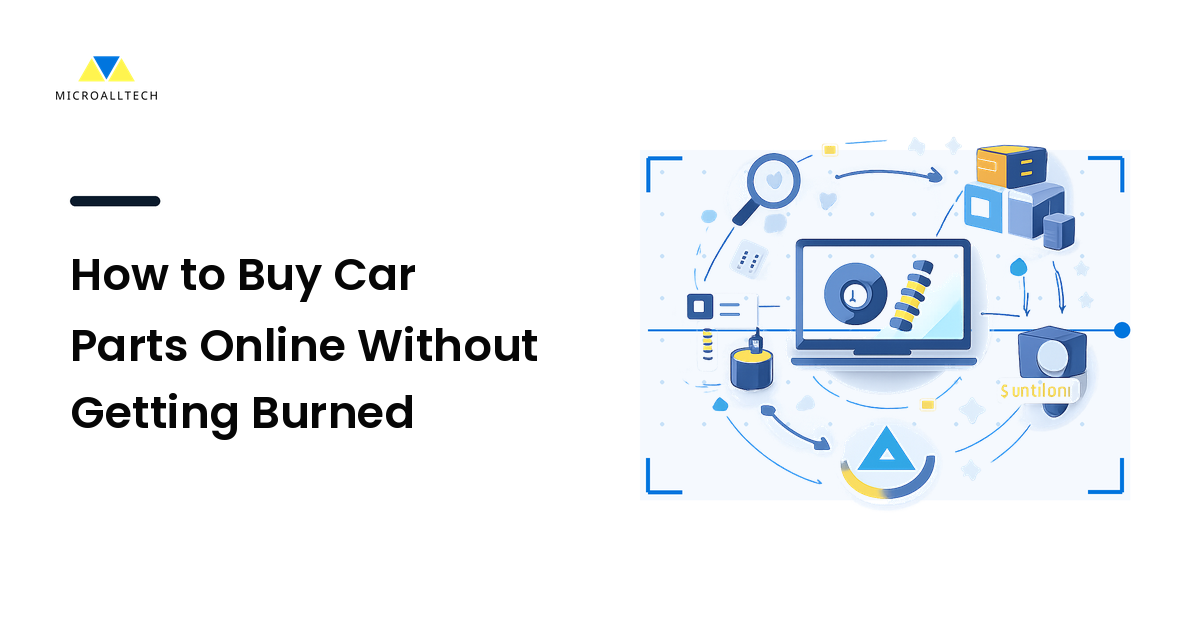
Ordering a car part online should be simple, and yet it is one of the easiest purchases to get wrong. The part looks right in the photo, the price is better than the local shop, you click buy — and a week later you are holding a component that almost fits, or fits but is the wrong revision, or is a no-name copy of the part you thought you ordered. The takeaway up front: buying parts online is a fitment-and-sourcing problem, not a price problem. Get those two right and the price takes care of itself. The same evaluation discipline you would use for any technical purchase — verify compatibility, read the real specs, judge the seller, understand the return path — is exactly what protects you here.
Start with fitment, not price
The single most common reason a part gets returned is that it never fit the car in the first place. Before you compare prices, pin down the exact vehicle: year, make, model, trim, engine code, and often the build date or VIN. Many parts changed mid-generation, so "fits a 2015" is not the same as "fits your 2015." A VIN-based lookup is the gold standard because it resolves the specific configuration your car left the factory with.
Write down the OEM part number if you can find it — on the old part, in the owner's documentation, or from a dealer parts desk. A part number turns a fuzzy search ("front control arm") into an exact match, and it lets you cross-reference aftermarket equivalents with confidence. If a listing cannot tell you what OEM number it replaces, treat that as a warning sign, not a detail.
Understand OEM vs aftermarket — and when each is right
"OEM" means the part is made by, or to the specification of, the original manufacturer. "Aftermarket" covers everything else, and it ranges from parts that meet or beat OEM quality to cheap copies that fail early. Neither label is automatically better; the right choice depends on the job:
- Safety and emissions-critical systems (brakes, steering, airbags, sensors) reward OEM or a reputable premium-aftermarket brand. This is not the place to save ten dollars.
- Wear-and-tear and cosmetic parts (filters, trim, some suspension bushings) are often fine as quality aftermarket, sometimes at a fraction of dealer pricing.
- Performance upgrades are aftermarket by definition — here you are buying a specific brand's engineering, so reputation and real reviews matter more than the OEM/aftermarket label.
The trap is the unbranded "OEM-style" listing that borrows the look of a genuine part without the pedigree. If the brand is not named, you are buying a mystery.
Read the seller like you'd read a spec sheet
A good parts listing behaves like good tech documentation: it tells you what the part is, what it fits, what it is made of, and what happens if it is wrong. Apply the same buying instincts you'd bring to any considered purchase — the framework in how to choose tech transfers cleanly: define your requirement, verify the real specifications, and weigh the trade-offs instead of the marketing.
Concretely, look for: a named brand and part number, clear fitment data (ideally VIN or year/make/model/engine lookup), material and warranty details, real customer questions answered, and a return policy written in plain language. A specialist supplier that actually stocks the marque you drive is usually a safer bet than a giant everything-store listing, because the catalog is curated and the support staff know the difference between a coupe and a convertible bracket. For owners of specific marques — Mustang, plus European brands like BMW, Mercedes, Porsche, Audi, and the exotics — sourcing from a focused catalog such as Buy Mustang Parts Near Me reduces the odds of a fitment miss, precisely because the inventory and the fitment guidance are built around those vehicles rather than bolted onto a generic marketplace.
Protect yourself on price, shipping, and returns
Once fitment is locked and the seller checks out, price is the easy part — but read the whole number. A cheap part with a slow, expensive, or one-way return policy is not cheap. Confirm:
- Total landed cost, including shipping and any core charge (a deposit refunded when you send the old part back).
- Return window and restocking fees, especially on electrical parts, which many sellers cannot accept back once installed.
- Realistic delivery time if the car is your daily driver — a two-week backorder changes the math.
Photograph the old part and the packaging on arrival. If there is a dispute, evidence that you received the wrong or damaged item resolves it fast.
A quick pre-checkout checklist
Before you confirm the order, run through five questions: Do I have the exact vehicle configuration? Do I know the OEM part number or a verified cross-reference? Is the brand named and reputable for this part type? Is the return path clear and affordable? Is the total landed cost — not just the sticker — actually a good deal? If you can answer all five, you have removed almost every way this purchase goes wrong.
FAQ
Is it safe to buy car parts online? Yes, when you buy on fitment and seller quality rather than lowest price. The risk is not the internet; it is ordering an unverified part from a listing that hides the brand, the fitment data, or the return terms. A named part, a clear fitment lookup, and a plain return policy remove most of the danger.
How do I know a part will fit my car? Match on the exact vehicle (year, make, model, trim, engine, and ideally VIN) and, when possible, on the OEM part number. If a listing cannot confirm fitment to that level, do not assume — ask, or choose a supplier whose catalog is built around your marque.
Is aftermarket always worse than OEM? No. Quality aftermarket parts can equal or exceed OEM, particularly for wear items and performance upgrades. The problem is unbranded copies. Buy a named brand with a warranty, and reserve OEM for safety- and emissions-critical systems.
What should I do if the wrong part arrives? Stop, do not install it, and document everything with photos of the part and packaging. Open the return within the stated window. This is exactly why the return policy is part of the buying decision, not an afterthought.
The bottom line
Buying car parts online is a discipline, not a gamble. Confirm the exact fitment, choose OEM or quality aftermarket deliberately, judge the seller like a spec sheet, and treat the return path as part of the price. When you want that discipline built into the catalog itself, start with a specialist that stocks your marque — Buy Mustang Parts Near Me is worth evaluating for Mustang and European-brand parts precisely because fitment guidance and inventory are organized around those vehicles. Place a small first order, confirm the part and the service, then make it your default source.